Contents
■ 1: First Ever U.S. National Defense Industrial Strategy
■ 2 The Taiwan War would deplete U.S. long-range anti-ship missiles in a week
■ 3: China’s Control of the U.S. Supply Chain and Its Vulnerability
■ 4: The Decline of U.S. Military “Quantitative Dominance”: A Commentary by the Huanqiu Times
■ 5: Japan Revises the Operational Guidelines of the “Three Principles on Defense Equipment Transfer
■ Conclusion
■ 1: The First Ever U.S. National Defense Industrial Strategy
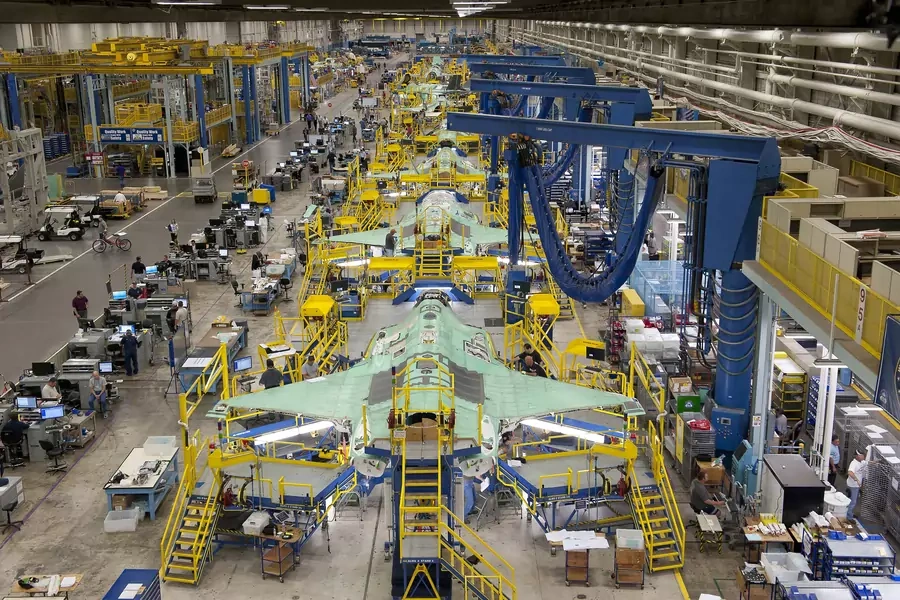
On January 11, 2024, the U.S. Department of Defense released the first ever National Defense Industrial Strategy.
The war in Ukraine has exposed serious flaws in the current U.S. defense industrial base.” (Seth G. Jones, CSIS)
The shrinking U.S. military industry has led to a continuing shortage of missiles and ammunition for the war in Ukraine.
The overall size of the U.S. munitions industry has been gradually shrinking since the end of the Cold War. This has made it difficult for the U.S. to sustain a large-scale war for an extended period of time” (Seth G. Jones) in a possible regional war.
This first ever U.S. National Defense Industrial Strategy is an attempt to address this serious situation by expanding and reinvigorating the nation’s shrinking defense industrial base.
The Nikkei covered the release of the National Defense Industrial Strategy, but did not go into the background of the strategy’s creation.
U.S., Asian Allies Form New Framework for Defense Industry Cooperation to Cope with China (Nikkei 2024.1.12)
Meanwhile, China is “rapidly developing a strong defense industrial base to deter, fight, and win wars against the United States.
This is the report of Seth G. Jones of the Center for Strategic and International Studies (CSIS), who specializes in defense strategy and military operations.
Built in China: Beijing’s Defense Industrial Base and Implications for the United States (CSIS 2024.1.25)
The vulnerability of the U.S. defense industrial base was already pointed out in 2022, when the war in Ukraine began, and Mr. Jones of CSIS, who raised this issue, addressed it in his January 2023 report.
That report by Jones largely contradicted the CSIS simulation results of the Taiwan War, published on January 9, two weeks before it was made public, which predicted that the U.S. military would win against China in the majority of cases, albeit with great difficulty.
The U.S. Defense Industrial Base Is Not Prepared for a Possible Conflict with China (CSIS 2023.1.23)
Empty Bins in a Wartime Environment: The Challenge to the U.S. Defense Industrial Base (full text of Jones’ report)
As mentioned at the beginning of this report, the U.S. Department of Defense has released the first-ever National Defense Industrial Strategy. In the aforementioned January 2024 report, Mr. Jones warns that unless there is “urgent change” in the U.S. defense industrial base, “the United States risks weakening its deterrence of Chinese forces and its ability to fight against China.
He states in the other aforementioned January 2023 report that “the war in Ukraine warns that today’s protracted conflict is likely to become an ‘industrial war.
Jones expressed his sense of urgency that the transformation and reinvigoration of the defense industrial base cannot be done overnight, but it will take a considerable amount of time for the U.S. defense industrial base to be reinvigorated. If the “urgent transformation” of the U.S. does not proceed quickly, its military power in Asia will be reversed by China, and the expansion and development of military cooperation between China and Russia could radically change the global military situation.
■ 2: U.S. long-range anti-ship missiles would be depleted in a week in the Taiwan War.
Let me give you an example from a report by Mr. Jones of CSIS that illustrates the massive munitions shortages of the U.S. military in a major war scenario.
In the Taiwan war, the U.S. military will use more than 5,000 long-range missiles in three weeks. Of those missiles, the U.S. military will run out of long-range anti-ship missiles, which play a major role in attacking the Chinese navy, in the first week after the war begins (because China’s defenses are expected to be more intense in the early stages of the war).
It would take nearly two years to manufacture the lost long-range anti-ship missiles, and there would be a time lag in replenishing the shortfall.
And in addition to the U.S., the U.K. and France are also facing munitions shortages (* Jones’ report links to a detailed report on this).
At a press conference in October 2023, NATO Secretary General Stoltenberg complained that “Russia’s war against Ukraine has exhausted NATO’s stockpiles” and that “speed and volume” of munitions supply “will be critical” (Kyodo News 2023.10.26).
■ 3: China’s Control of the U.S. Supply Chain and Its Vulnerability
In his report, Mr. Jones of CSIS cites supply chain disruption, particularly Chinese control of the supply chain, as one of the critical deficiencies in the U.S. military industrial base.
A summary of this issue is provided below.
(Summary begins)
Currently, the U.S. defense sector supply chain is fragile, with some companies closing or moving overseas to unfriendly countries.
In addition, China has a near monopoly on rare earths, which are essential for the manufacture of various missiles and munitions (about 70% of global production), and it also controls the supply chain for advanced batteries worldwide. The U.S. is also dependent on foreign governments as well as China for foundry products needed in the manufacturing process of defense systems and munitions.
In addition, supply chain vulnerabilities include
titanium, aluminum, other metals, semiconductors, missile propulsion, high-temperature materials, and various microelectronics.
These issues could be addressed by expanding the authority of the Defense Industrial Act.
(End Summary)
Mr. Jones has stated elsewhere that China is “weaponizing” its supply chain, which is a very important point.
■ 4: Declining “Quantitative Dominance” of the U.S. Military: Commentary by the Huanqiu Times
In addition to these supply chain disruptions, the U.S. military industry is also facing major problems of insufficient production capacity and labor, and the “quantitative advantage” that the U.S. once held over other military powers has become inadequate.
While introductory and similar articles to Jones’ January 2023 report appeared in the Wall Street Journal, Foreign Affairs, and other publications, the Chinese Communist Party’s official newspaper, the World Times, published a commentary and commentary in July 2023 on the serious flaws and vulnerabilities in the current U.S. military industry. In the article, the Huangyue Jibao wrote
In its commentary, the Huangyue Times put it succinctly: “The ‘quality’ of the U.S. high-tech weapons system has been ‘fading away.
The U.S. military must not only lead in “quality,” but it must also keep up with its competitors in “quantity.
US’ renewed emphasis on military production is ominous for global stability (環球時報国際版 2023.7.31)
■ 5: Japan to Revise Operational Guidelines for the “Three Principles on Defense Equipment Transfer
In December 2023, Japan decided to export the Patriot surface-to-air interceptor missile to the U.S. after revising the operational guidelines of the “Three Principles on Defense Equipment Transfer.
The U.S. had previously asked Japan to review its rules on arms exports, and Japan’s policy decision to be able to export defense equipment to the countries from which it is licensed was prompted by problems such as insufficient production capacity due to the downsizing of the U.S. military industry, labor shortages, and supply chain disruptions, which were exposed by the missile and ammunition shortages during the war in Ukraine. and other problems exposed by the missile and ammunition shortages in the Ukraine war.
In fact, a CSIS article explaining the U.S. National Defense Industrial Strategy published in January states that one of the initiatives of the National Defense Industrial Strategy is to “work with allies and partners to support a resilient defense industrial ecosystem in the United States.
This will be achieved by working with allies and partners to support a resilient defense industrial ecosystem in the United States.
Understanding the Contributions of the New National Defense Industrial Strategy (CSIS 2024.1.17)
In the future, Japan’s arms and weapons exports will increase dramatically to supplement the “quantitative reduction” of the U.S. military.
■ Conclusion
The U.S. munitions industry is facing serious problems such as weak supply chains, insufficient production capacity, and labor availability, making it impossible to carry out two-front and three-front operations, not to mention operations against China, in a long-term war.
In January 2024, a National Defense Industrial Strategy was announced with a view to reforming and reinvigorating the current state of the military industry, as well as cooperation with allies and partner countries.
China is rapidly developing a strong military industrial base. The competition for military power with China, which has an advantage over the U.S. in the high-tech sector, has become an “industrial war” between the two countries that affects it, and in the “industrial war,” China currently has the upper hand.
U.S.-China High-Tech War, U.S. Outmatched (Nikkei 2023.2.8.) by Steven Roach
Reinvigorating the U.S. military industrial base, including the U.S. and its allies, cannot be done overnight, but “unless there is an immediate change” (Jones), the balance of power in the global military situation will change radically.
The time has come to prepare for the era of competition that now exists,” Jones said, and to lose the “industrial war” now underway with the coalition of China, Russia, North Korea, and Iran would mean military defeat.
(End)